

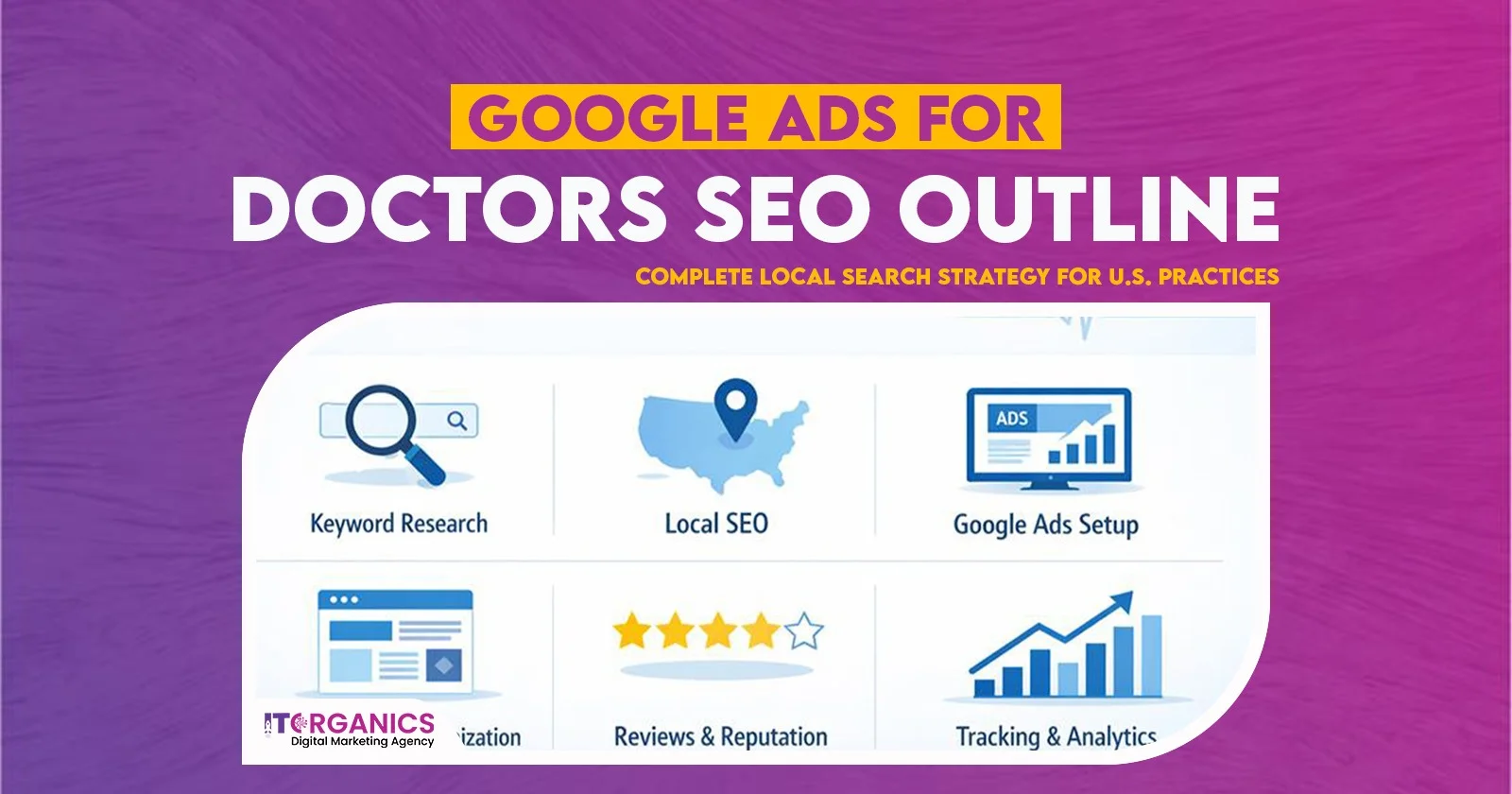
Planning Google Ads for doctors and medical practices starts with the service being promoted, the patients the practice can actually serve, applicable advertising requirements, and a reliable inquiry process. Paid search and organic SEO are separate channels; a campaign does not purchase higher organic rankings.
This is a planning guide for practice owners and marketing teams. It is not a promise of ad approval, appointment volume, or legal compliance.
Need help running your campaigns? See our Google Ads management services.
Start with service eligibility and advertising requirements.
Google’s healthcare and medicines policy applies restrictions that vary by service and target location; some categories require certification. Review the specific category and market before building a campaign. An agency relationship does not replace the practice’s own professional, legal, or privacy review.
Google also restricts health-related personalized advertising. Do not assume that remarketing lists or audiences based on health conditions are permitted. Check the current policy and the actual campaign configuration.
A campaign planning checklist for medical practices
| Area | Questions to resolve |
|---|---|
| Service | What is offered, who is eligible, and what can the practice substantiate? |
| Market | Where can the practice serve patients, including any telehealth limitations? |
| Capacity | Can staff respond and offer the advertised appointment availability? |
| Policy review | Do the service, targeting, destination, and any required certification meet current requirements? |
| Landing page | Does it match the ad and explain the service accurately? |
| Measurement | What is a valid inquiry, and which data can be collected and shared appropriately? |
| Budget | What covers media, management, creative, page work, and measurement? |
Organize the campaign around genuine service needs.
Group related services so that the ad and destination answer the same question. Avoid an overly fragmented structure before there is enough evidence to manage it. A location or specialty term is only useful when it accurately represents the practice.
Review search intent and actual search-term data where available. Build exclusions from evidence: a word such as “free” should not be excluded automatically if the practice genuinely offers an eligible free service. Similarly, do not advertise emergency availability unless the practice actually provides it.
Match the landing page to the Google Ads for doctors
Explain the service, clinician or practice identity, location, opening hours, and the next step. State availability and insurance information only when verified. Avoid treatment guarantees, unsupported superiority claims, and stock testimonials presented as patient feedback.
Keep the inquiry route clear. A marketing form should not invite unnecessary clinical details. Have the practice review forms, analytics, call tools, and third-party integrations before launch, including what information leaves its systems. A secure-looking page or a cookie banner alone does not establish compliance.
Our website development services can support a scoped landing-page project; clinical and regulatory claims still need appropriate review.
Define measurement before spending.
Separate an ad click, a form event, a valid inquiry, a booked appointment, and an attended appointment. These are not interchangeable. A form event can include duplicates or unsuitable requests; a call’s duration alone does not establish its value.
Agree what can be measured safely and who is responsible for reconciliation. Do not send patient information to advertising tools without a reviewed and appropriate basis. If downstream measurement is unavailable, report that limit rather than presenting every inquiry as an acquired patient.
Plan a budget with explicit assumptions.
Separate media spend from agency fees, creative production, landing-page work, and measurement costs. Set the review period and the conditions for changing spend. Avoid forecasts based only on an assumed click price and a guessed conversion rate.
Where historical data exists, document its period, service, and market. A new clinic, changed appointment capacity, or different specialty may make earlier results a poor forecast. No universal budget or return applies to every medical practice.
How paid search and SEO fit together
Paid campaigns may provide information about queries and messages that attract relevant inquiries. Use those findings as one input when planning useful website content. Organic search still requires its own discovery, indexing, and relevance work.
Structured data should describe visible, accurate practice information. It is not a substitute for campaign setup, policy approval, or evidence of clinical quality. Do not claim that adding schema automatically improves Google Ads Quality Score.
See our SEO services for organic search scope and healthcare marketing services for broader engagement.
Review the campaign after launch
- Check policy status and destination availability.
- Review relevant search terms, geography, and service match.
- Confirm that inquiries reach the responsible staff.
- Compare spending with valid inquiries using the agreed definitions.
- Record changes and avoid attributing every performance movement to one edit.
- Revisit claims and availability when practice operations change.
Frequently asked questions
Does paying for Google Ads improve organic rankings?
No. Paid placement and organic search are separate. A useful website can support both visitors from ads and organic discovery, but advertising spend does not buy organic ranking.
Can every medical service be advertised?
Eligibility depends on the service, target market, and current policies. Check the relevant requirements and any certification before committing a campaign budget.
Can an agency guarantee appointments?
No responsible forecast should ignore demand, policy eligibility, competition, the offer, and the practice’s response capacity. Agree on deliverables and measurement rather than guaranteed patient numbers.
Discuss a healthcare campaign scope.
Contact IT Organics LLC with the practice’s services, target market, and campaign goals. Share operational requirements rather than patient records in an initial marketing inquiry.